AVATR Vision
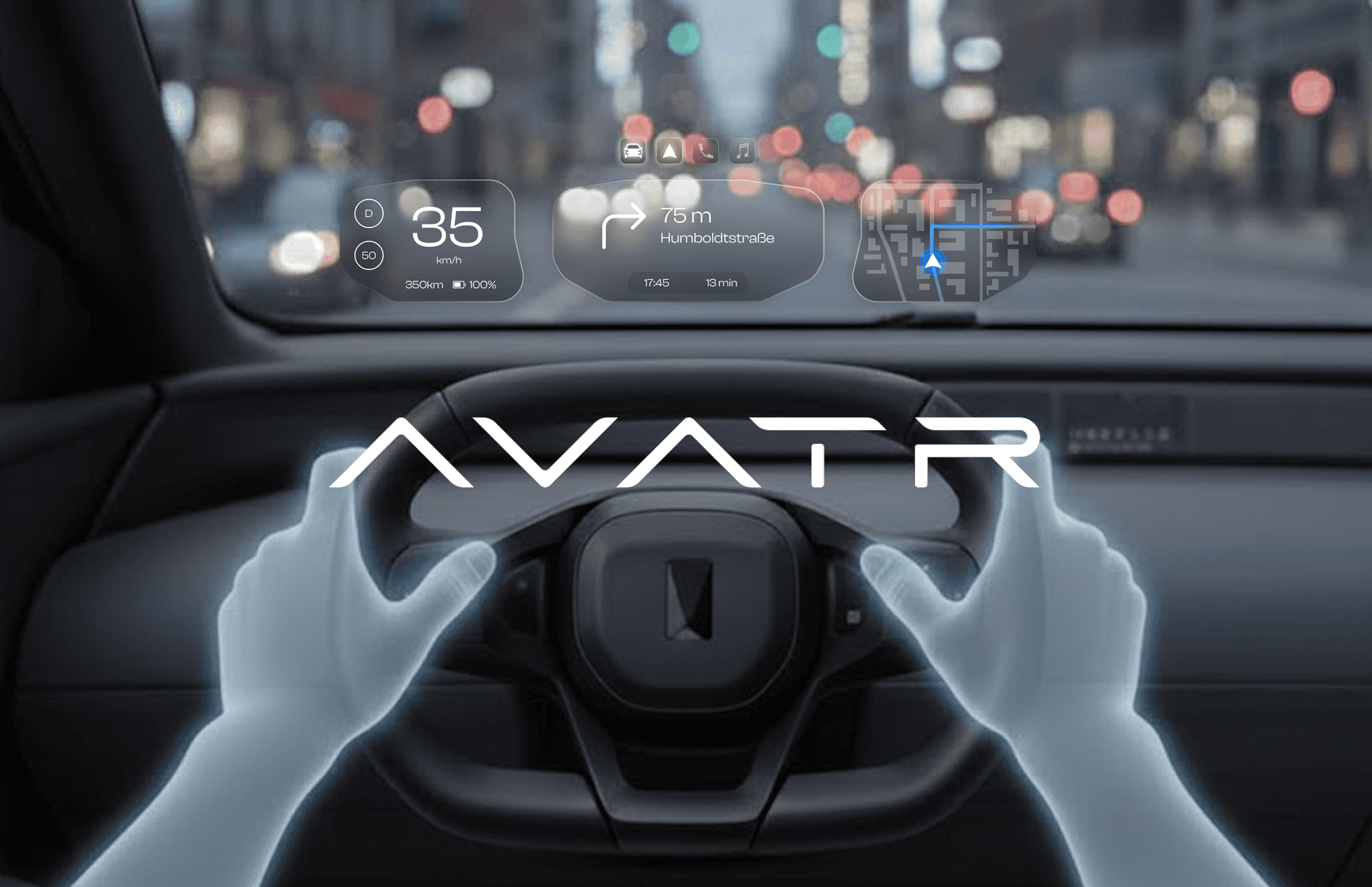
A next-generation AR Head-Up Display designed to reduce cognitive load and improve driver focus.
Role
UX/UI Designer
Industry
Automotive
status
Concept
Year
2026
Challenge
In 2024, AVATR's Advanced UX/UI Design team shared a brief: identify meaningful user problems within their ecosystem and design a forward-looking interaction concept aligned with the brand's vision. I completed the project as an exploratory proposal and presented it to their design leadership.
The core issue was clear: the AVATR 11 cockpit. Its multi-screen setup led to information overload, limited emotional engagement and a reduced sense of control. More screens didn't mean better awareness, they meant more to monitor.
I revisited the project in 2026, bringing insights from my work on mixed-reality environments at Renault Group. The goal stayed the same: designing a system that reduces cognitive load, but this time with a clearer understanding of how spatial hierarchy shapes driver attention.
Process
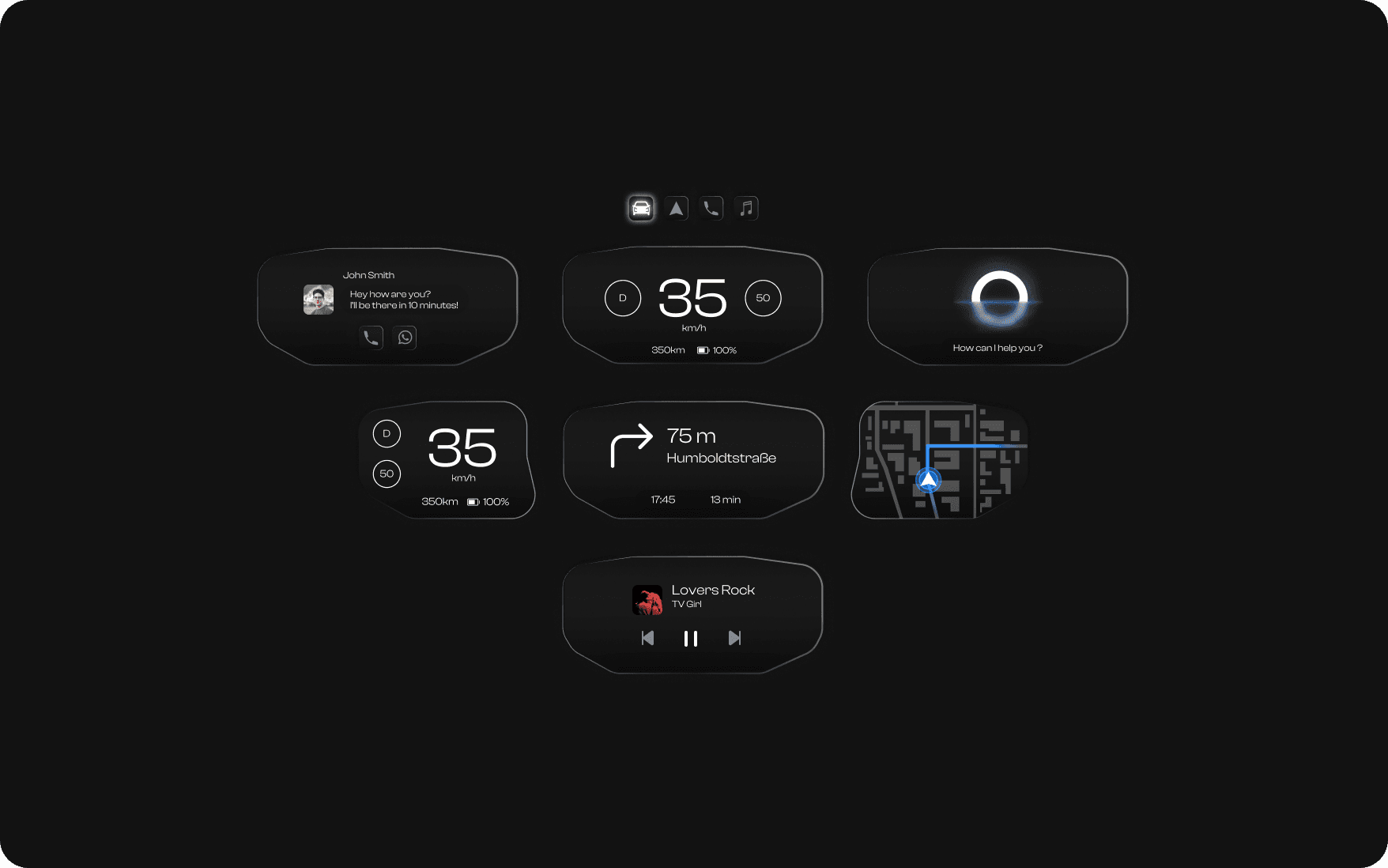
I started by treating the AR HUD not as a single screen, but as a component system: a library of reusable information blocks that can be combined differently depending on driving context.
Each component is designed to be self-contained: readable at a glance, consistent in visual language and interchangeable by priority. The system assembles them into contextual layouts: never showing everything at once, but only what the current moment requires.
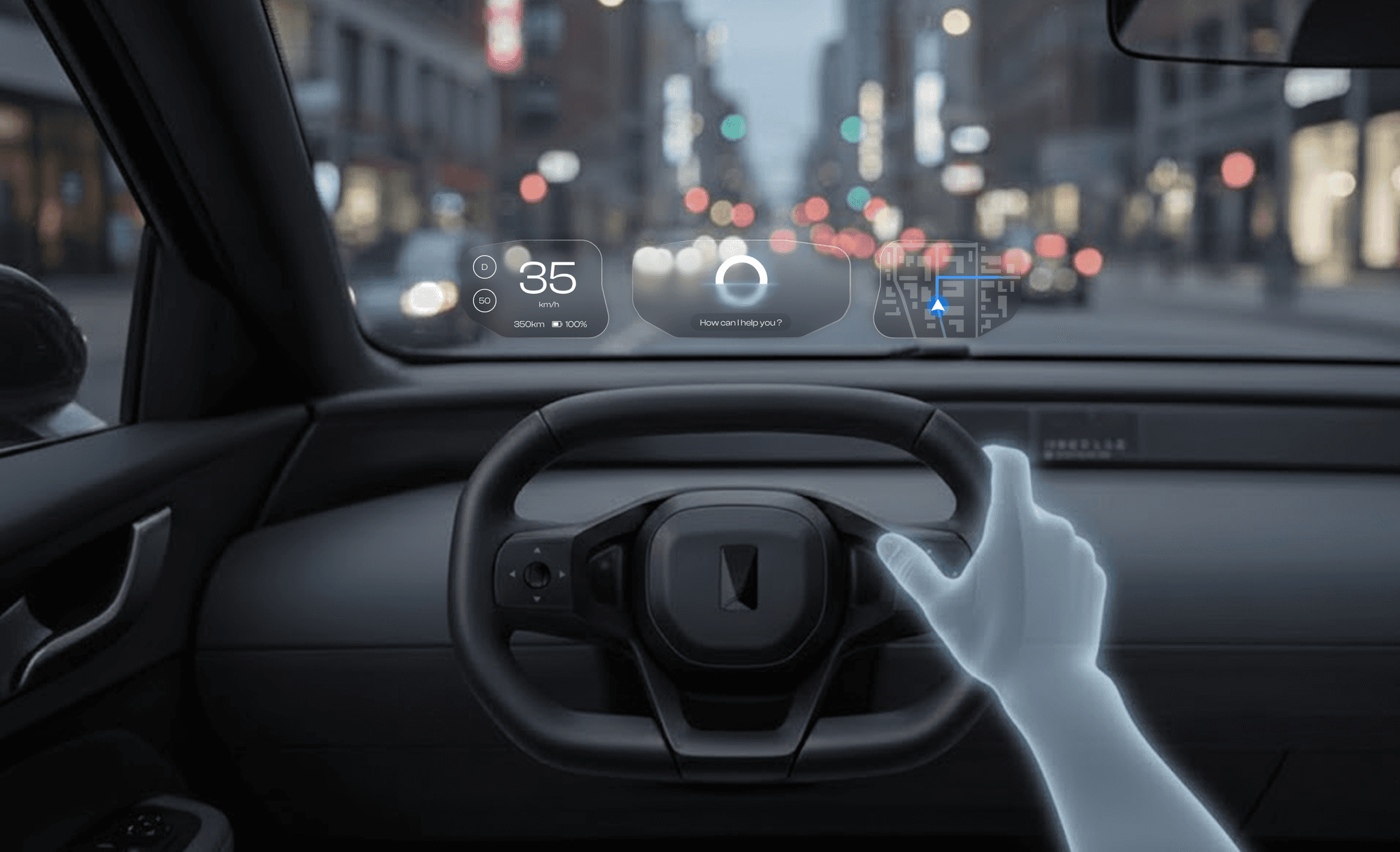
The layout logic is controlled via the interactive steering wheel. Haptic buttons let the driver cycle between modes, adjust volume, accept calls and manage navigation. All without reaching for the centre screen or shifting focus from the road.
Outcome
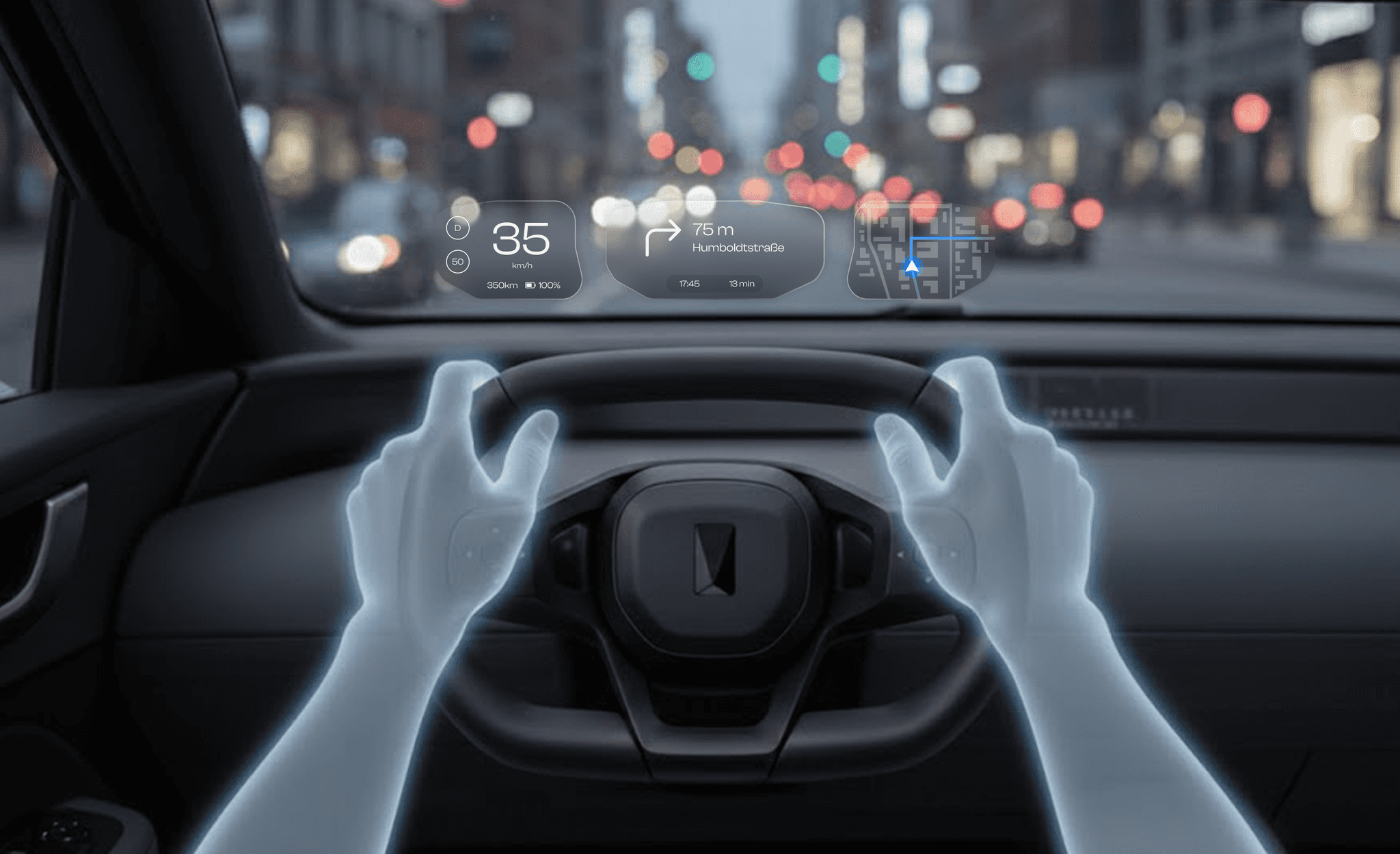
The result is a cockpit where information finds its place by priority, not by screen availability. The driver sees what matters, when it matters and controls it without taking hands off the steering wheel.
For me, AVATR Vision was also a personal benchmark. It showed how much I had learned between 2024 and 2026, not just in technical skills, but in knowing what makes an interaction feel intentional, not just visible.
AVATR Vision
A next-generation AR Head-Up Display designed to reduce cognitive load and improve driver focus.
Role
UX/UI Designer
Industry
Automotive
status
Concept
Year
2026
Challenge
In 2024, AVATR's Advanced UX/UI Design team shared a brief: identify meaningful user problems within their ecosystem and design a forward-looking interaction concept aligned with the brand's vision. I completed the project as an exploratory proposal and presented it to their design leadership.
The core issue was clear: the AVATR 11 cockpit. Its multi-screen setup led to information overload, limited emotional engagement and a reduced sense of control. More screens didn't mean better awareness, they meant more to monitor.
I revisited the project in 2026, bringing insights from my work on mixed-reality environments at Renault Group. The goal stayed the same: designing a system that reduces cognitive load, but this time with a clearer understanding of how spatial hierarchy shapes driver attention.
Process
I started by treating the AR HUD not as a single screen, but as a component system: a library of reusable information blocks that can be combined differently depending on driving context.
Each component is designed to be self-contained: readable at a glance, consistent in visual language and interchangeable by priority. The system assembles them into contextual layouts: never showing everything at once, but only what the current moment requires.
The layout logic is controlled via the interactive steering wheel. Haptic buttons let the driver cycle between modes, adjust volume, accept calls and manage navigation. All without reaching for the centre screen or shifting focus from the road.
Outcome
The result is a cockpit where information finds its place by priority, not by screen availability. The driver sees what matters, when it matters and controls it without taking hands off the steering wheel.
For me, AVATR Vision was also a personal benchmark. It showed how much I had learned between 2024 and 2026, not just in technical skills, but in knowing what makes an interaction feel intentional, not just visible.