Reset
A UX-driven phygital system designed to prototype, test and validate next-generation in-car interactions.
Role
HMI and Interaction Designer
Industry
Automotive · R&D
status
Concept
Year
2023
Challenge
In traditional automotive design, interaction concepts are reviewed on 2D screens (flat renders, wireframes, user flows). Stakeholders validate ideas without ever sitting in the vehicle, reaching for a control, or experiencing the spatial relationship between the driver, the displays and the physical environment.
This creates a gap between design intent and real-world usability. Decisions are made from abstraction, not from experience.
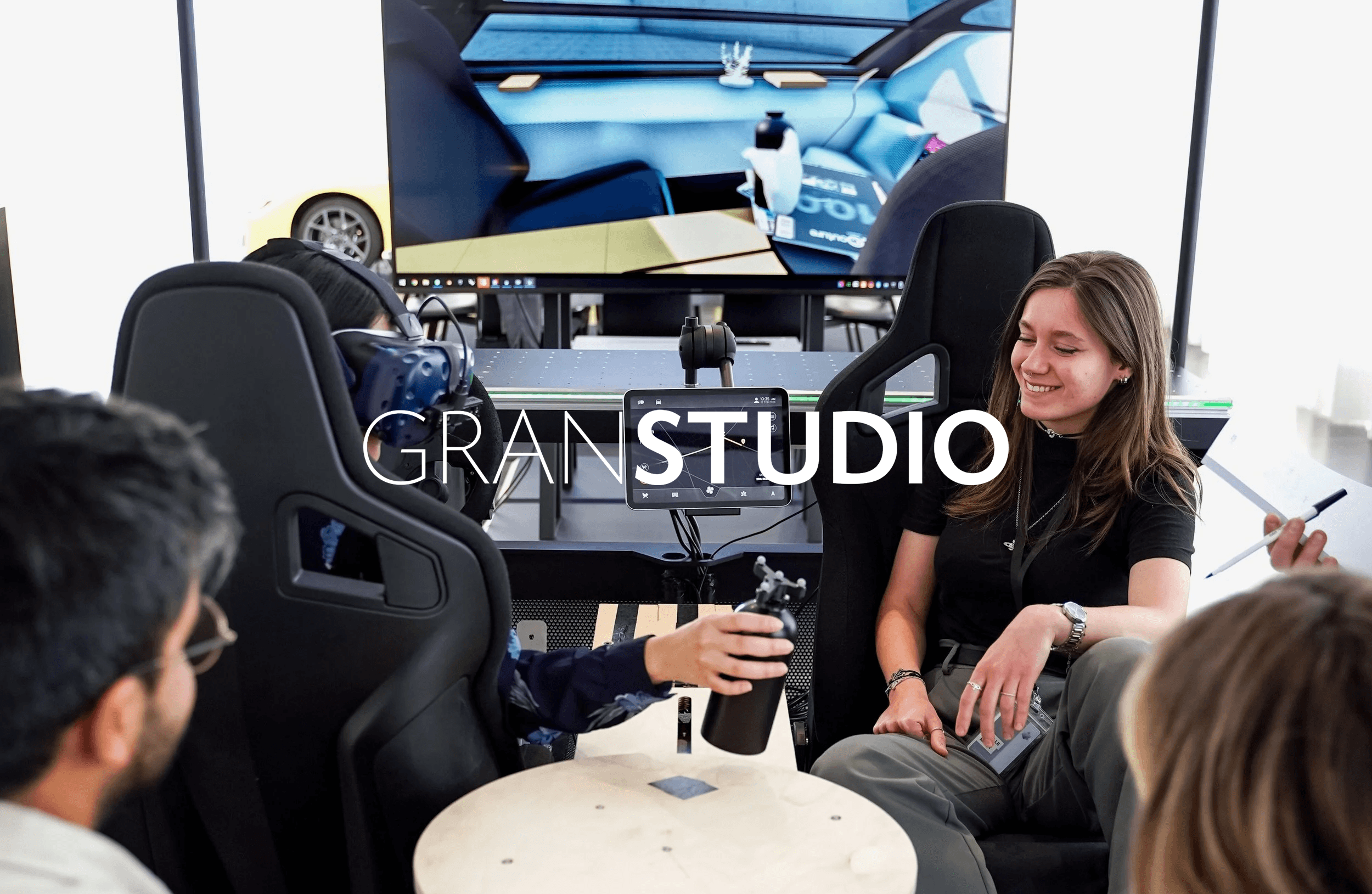
Reset was created at Granstudio to close that gap: a phygital research system that lets designers, ergonomists and decision-makers step inside a vehicle concept and interact with it, before a single production part exists.
Process
We observed how drivers naturally interact with the entire cabin (wheel, stalks, console, overhead controls) then mapped reach zones, visual attention patterns and cognitive loads.
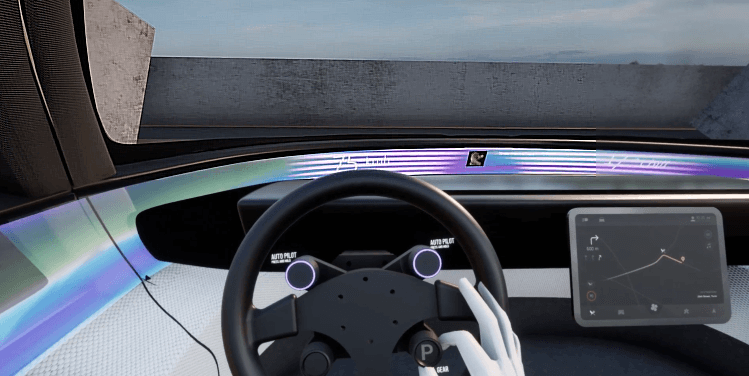
These observations were translated into coherent interaction flows exploring gesture, touch and hybrid control systems. Every decision aimed to reduce friction, prioritise haptic and spatial feedback, and keep gesture sets small.
The loop was fast: test a gesture in XR → confirm reach on the physical mockup → refine for intuitiveness → retest.
Motion animations were integrated directly into phygital models for realistic testing and clear stakeholder communication.
My key Learnings:
1. Physical anchors improve spatial UX. The body already knows where to reach, improving cognitive efficiency.
2. Fidelity follows frequency. The most-used interactions deserve the most refinement.
3. Phygital prototyping is faster, giving stakeholders a real experience.

Outcome
The Reset system is now used at Granstudio as a standard research tool for early-stage automotive UX projects.
It enables :
Design decisions based on lived experience, not abstract reviews.
Cross-functional alignment around a tangible, interactive prototype.
Faster iteration cycles, reducing the time from concept to validated interaction by approximately 60%.
For me, Reset was the project where I learned that great in-car UX isn't just about screens, it's about the conversation between the driver, the vehicle and the space between them.
Reset
A UX-driven phygital system designed to prototype, test and validate next-generation in-car interactions.
Role
HMI and Interaction Designer
Industry
Automotive · R&D
status
Concept
Year
2023
Challenge
In traditional automotive design, interaction concepts are reviewed on 2D screens (flat renders, wireframes, user flows). Stakeholders validate ideas without ever sitting in the vehicle, reaching for a control, or experiencing the spatial relationship between the driver, the displays and the physical environment.
This creates a gap between design intent and real-world usability. Decisions are made from abstraction, not from experience.
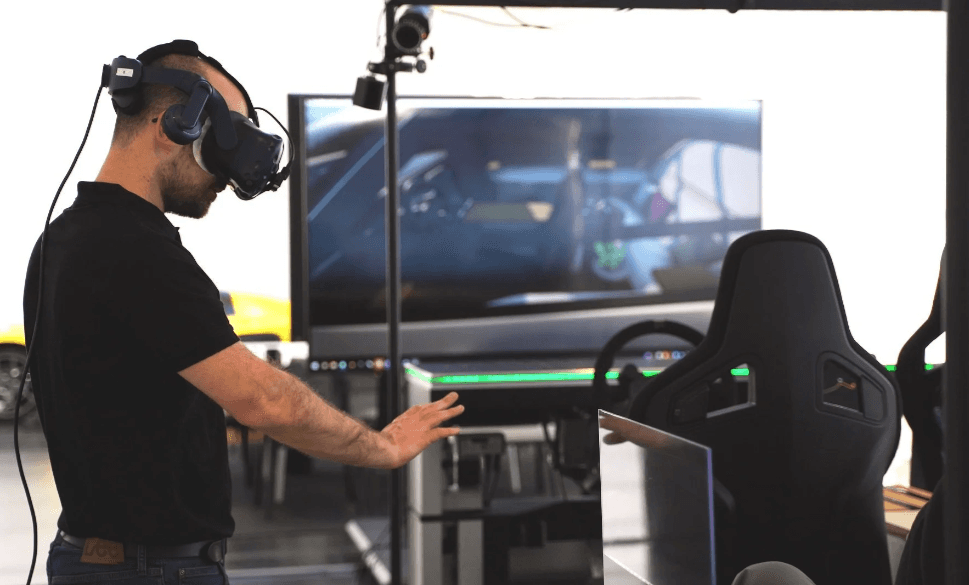
Reset was created at Granstudio to close that gap: a phygital research system that lets designers, ergonomists and decision-makers step inside a vehicle concept and interact with it, before a single production part exists.
Process
We observed how drivers naturally interact with the entire cabin (wheel, stalks, console, overhead controls) then mapped reach zones, visual attention patterns and cognitive loads.
These observations were translated into coherent interaction flows exploring gesture, touch and hybrid control systems. Every decision aimed to reduce friction, prioritise haptic and spatial feedback, and keep gesture sets small.
The loop was fast: test a gesture in XR → confirm reach on the physical mockup → refine for intuitiveness → retest.
Motion animations were integrated directly into phygital models for realistic testing and clear stakeholder communication.
My key Learnings:
1. Physical anchors improve spatial UX. The body already knows where to reach, improving cognitive efficiency.
2. Fidelity follows frequency. The most-used interactions deserve the most refinement.
3. Phygital prototyping is faster, giving stakeholders a real experience.
Outcome
The Reset system is now used at Granstudio as a standard research tool for early-stage automotive UX projects.
It enables :
Design decisions based on lived experience, not abstract reviews.
Cross-functional alignment around a tangible, interactive prototype.
Faster iteration cycles, reducing the time from concept to validated interaction by approximately 60%.
For me, Reset was the project where I learned that great in-car UX isn't just about screens, it's about the conversation between the driver, the vehicle and the space between them.